
If you have green grass, you probably know that sometimes it's not easy to keep it looking nice. It eventually becomes a balance...running your sprinklers a lot, on a frequent watering schedule, and paying the super expensive water bill that comes along with that. Or watering less, saving some money on the bill, and risking your grass retaliating...brown patches, etc. Or, if you don't have underground sprinklers, this all becomes much more difficult.
There's a better way to balance a good looking lawn and your water bill
So how do you balance this to get the best of both worlds...healthy looking grass, and manageable bills? You could use a rain sensor with your sprinkler system's rain gauge, if it's equipped with one. But that just prevents your sprinklers from running if it thinks your grass got enough water from rain. It doesn't normally take other factors into account.
But how much sun was shining on your grass the last few days? What was the humidity level, and how much did that prevent your grass from losing water? These things all factor into something called evapotranspiration, which helps determine how much water your grass needs. If you can calculate this, instead of watering your grass for 20 minutes a day three times a week, or whatever you're watering schedule is, you can water it just as much as it needs. Maybe some days that's 8 minutes in the front yard and 10 minutes in the backyard. Other days it could be 15 minutes in the front yard and 17.5 minutes in the backyard. But who wants to constantly calculate all of that, even if you knew how?
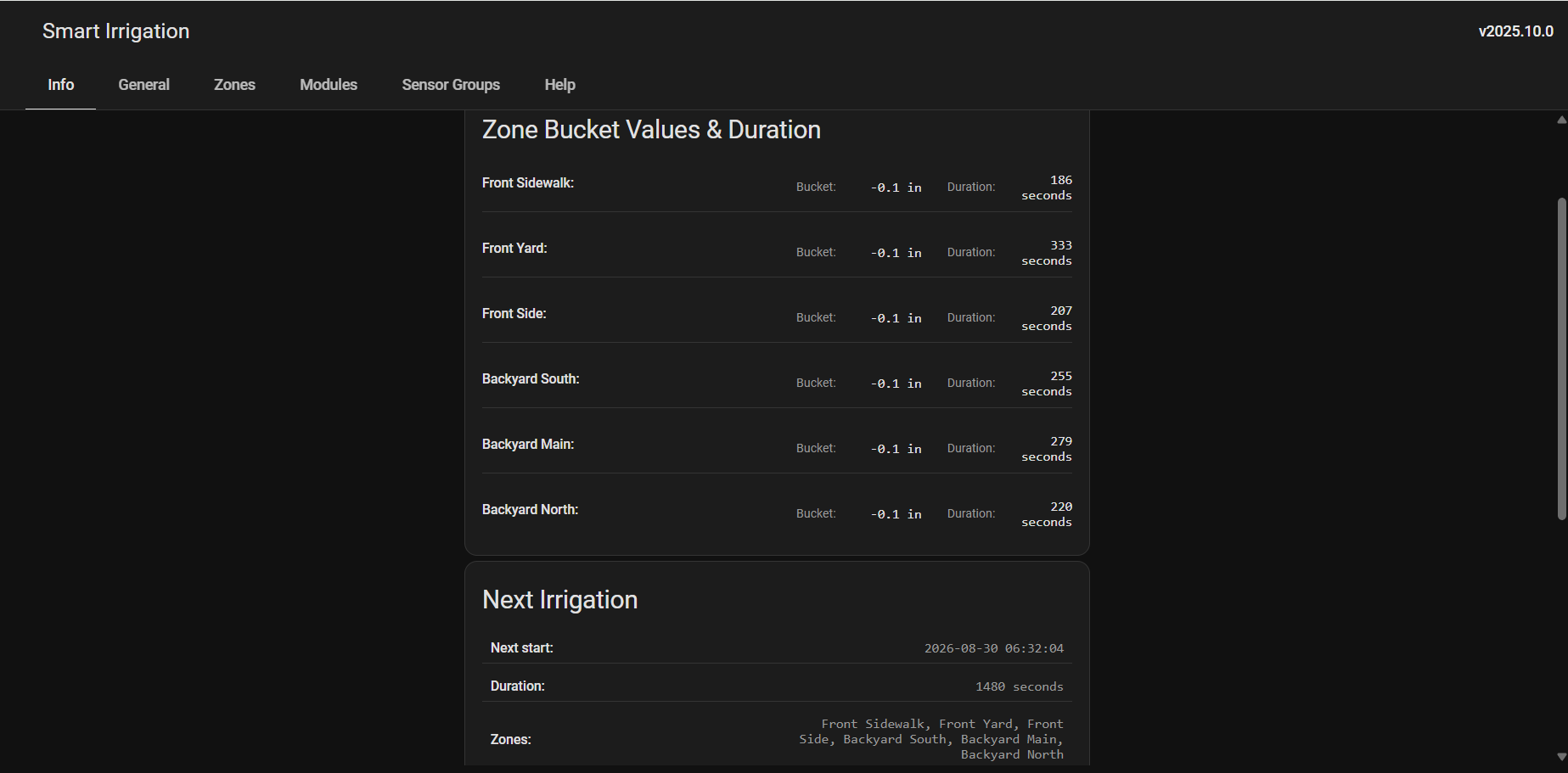
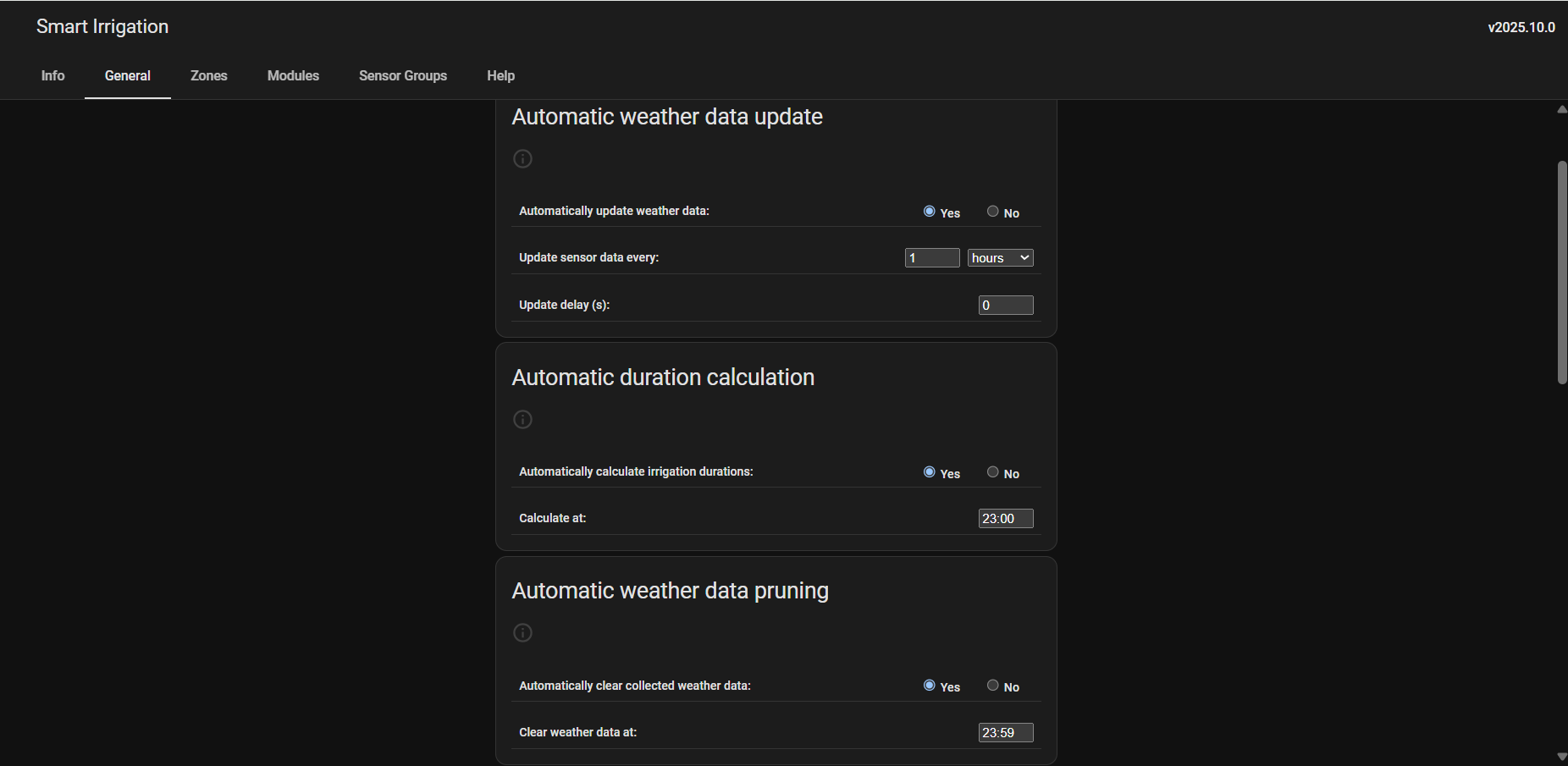
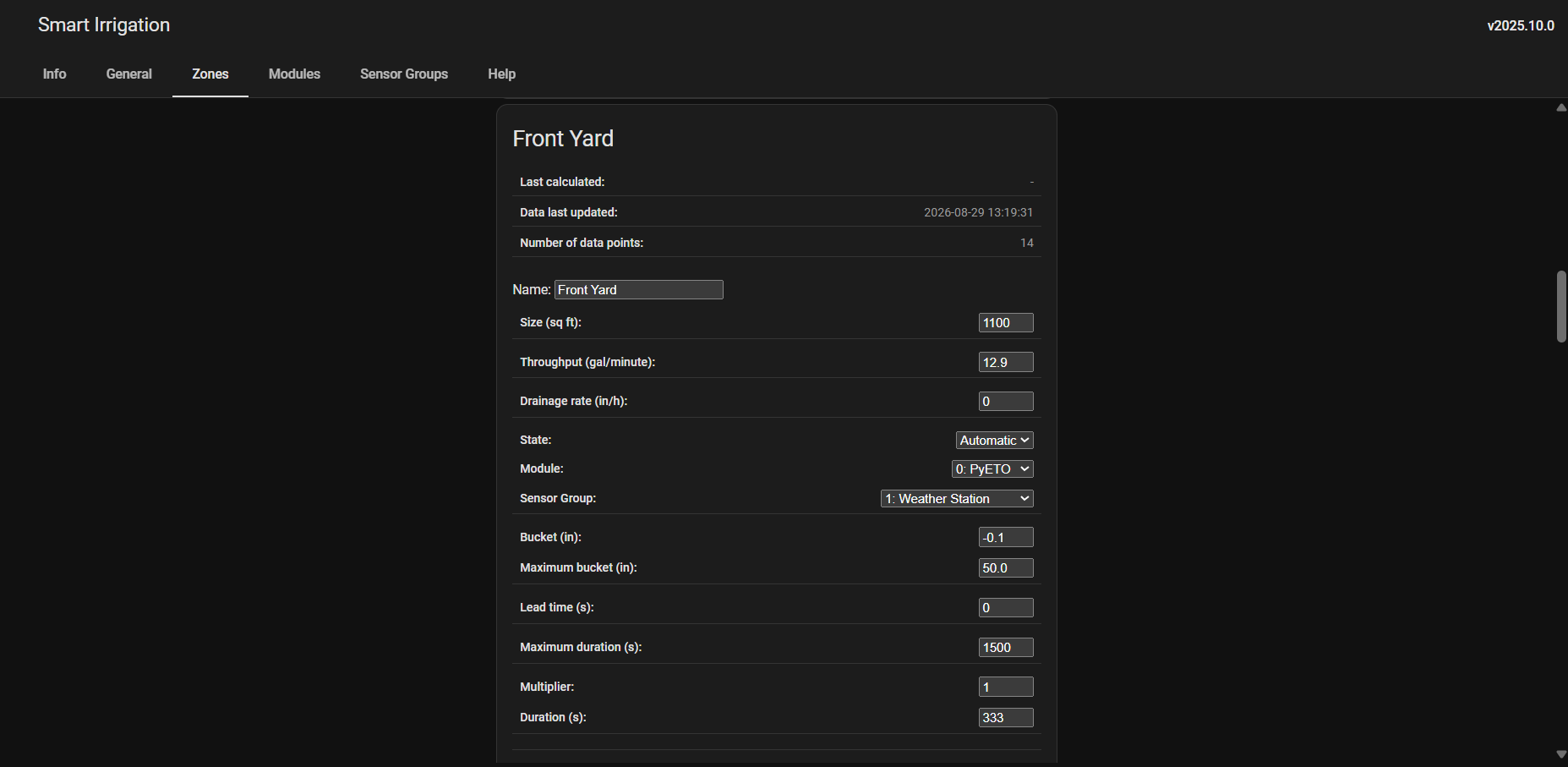
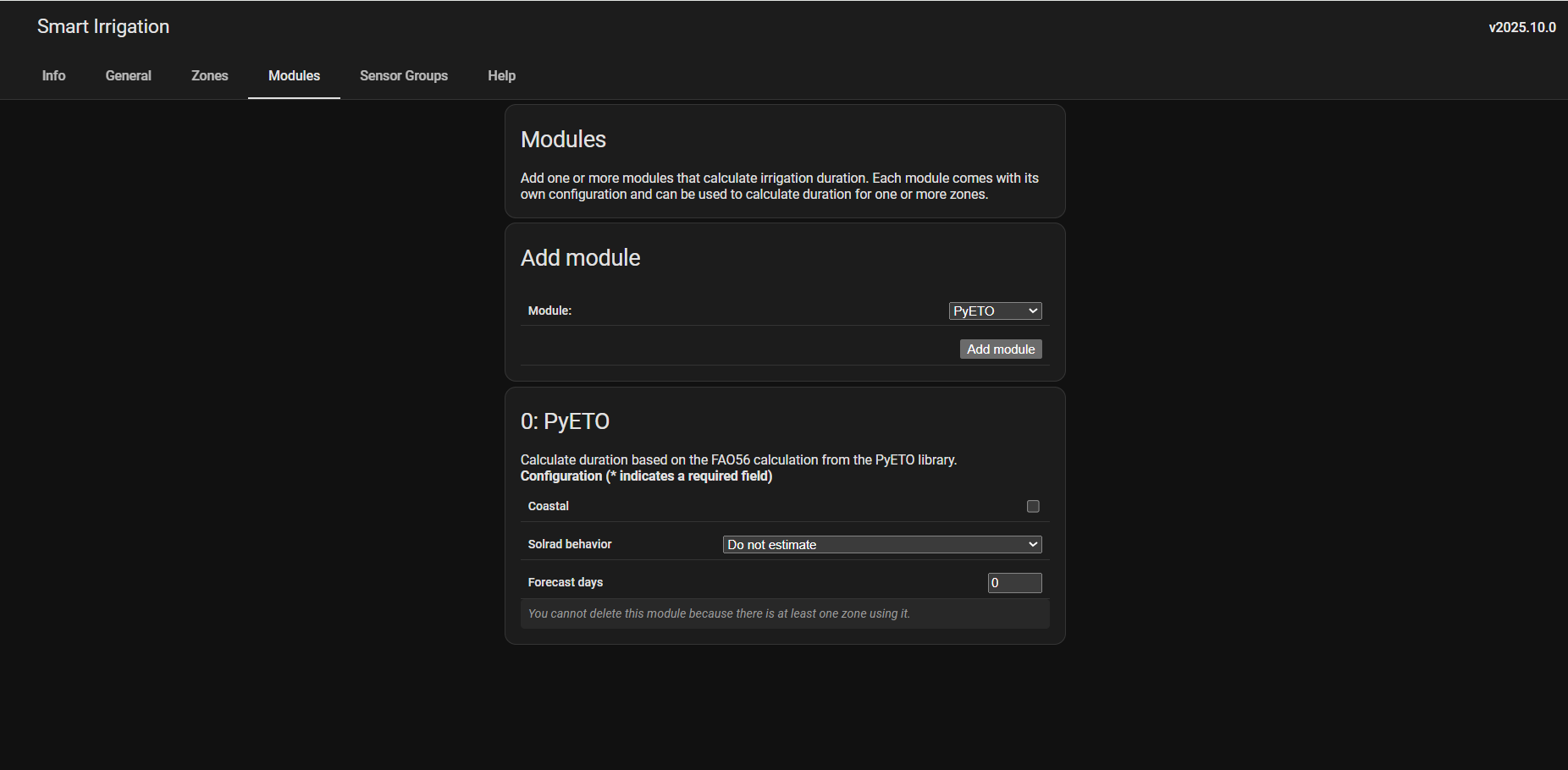
Automating evapotranspiration calculations for great looking grass while saving money
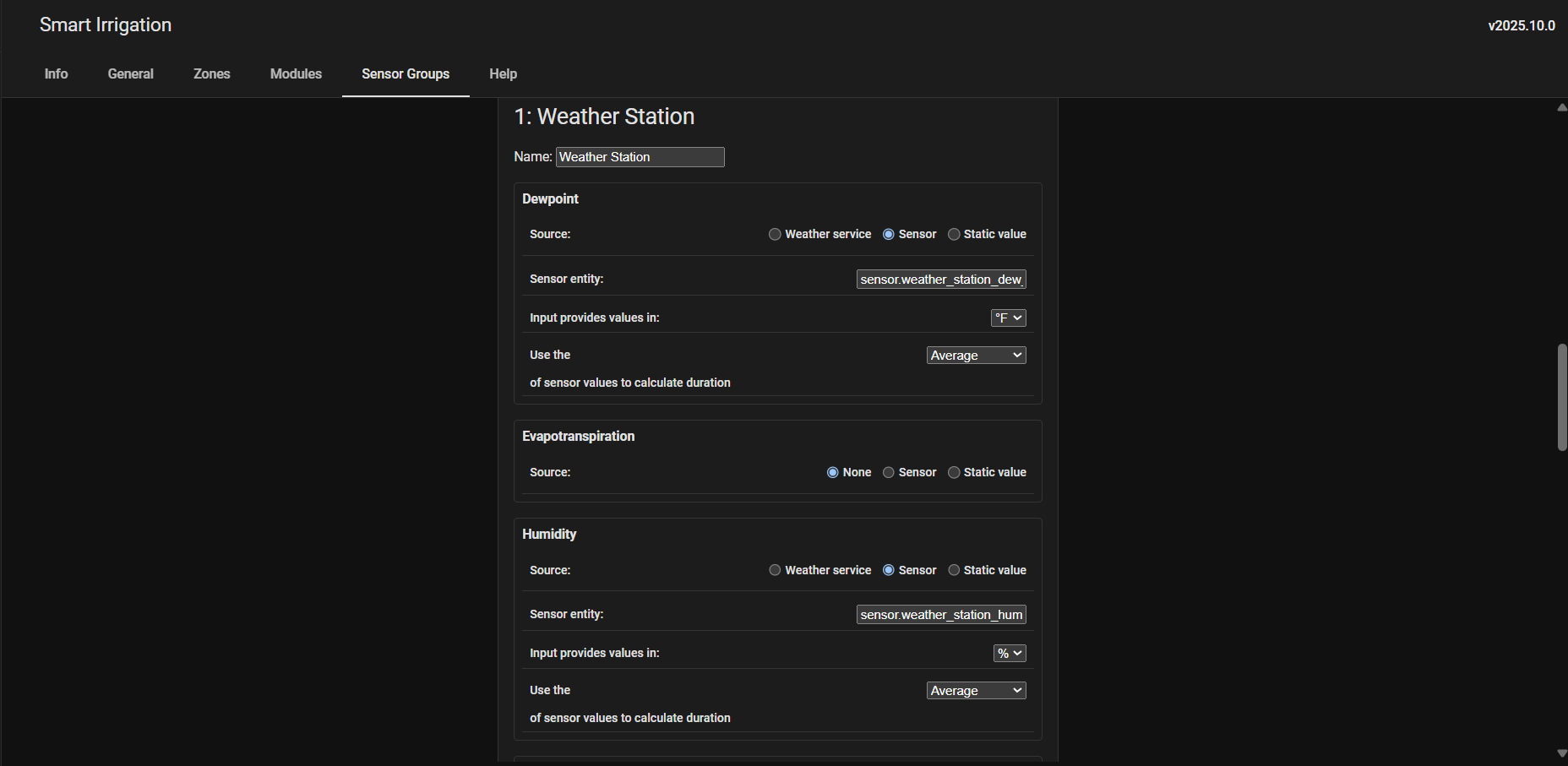
If you use Home Assistant, there's an integration called Smart Irrigation which handles all of this for you. It takes inputs from various sources of your choice, depending on what you have available. In my case, we have a weather station on a tall pole in the backyard. The weather station alone feeds into the Smart Irrigation integration to provide almost all inputs that it needs. For any that it doesn't provide, we use our local weather forecast. However, using only the local weather forecast in the past, we found that on many days even when there is a large chance of rain, it doesn't actually rain here. Which is why we now use the weather station to determine whether it actually rained in our backyard or not, and if so, how much rain fell. This directly impacts how much we need to water our grass.
Once Smart Irrigation has all of the parameters, which also includes the area of each sprinkler zone, it does the rest of the work. For the zone size, I simply went to my robot lawnmower app which automatically calculates the square footage of each zone that it mows. In some cases, like the backyard which has three zones, I simply divided the area of the backyard by three to estimate the size of each sprinkler zone, which I figure is close enough. As for the watering, I use OpenSprinkler. I use a home assistant integration for that as well, and I have an automation that references the Smart Irrigation watering time in each zone and then tells Open Sprinkler to water each zone for the designated amount of time which Smart Irrigation calculated.
What if I don't have underground sprinklers?
Even if you don't have underground sprinklers in your yard, you can still leverage Smart Irrigation to save money on your water bill. Maybe you have a manual sprinkler that sits out in your front yard, and another in your back yard, connected to water spigots via garden hoses. In this case, you could use something like a B-hyve water timer. Then you can create a Home Assistant automation to "manually" water your grass for the exact number of minutes and seconds that Smart Irrigation determines it needs. As long as you position the manual sprinkler device (or multiple, if necessary) properly, this more "manual" method is still automated, and still does the job at ensuring your grass stays happy and looking great.